
Corey’s Top 5 Elk Hunting Tips
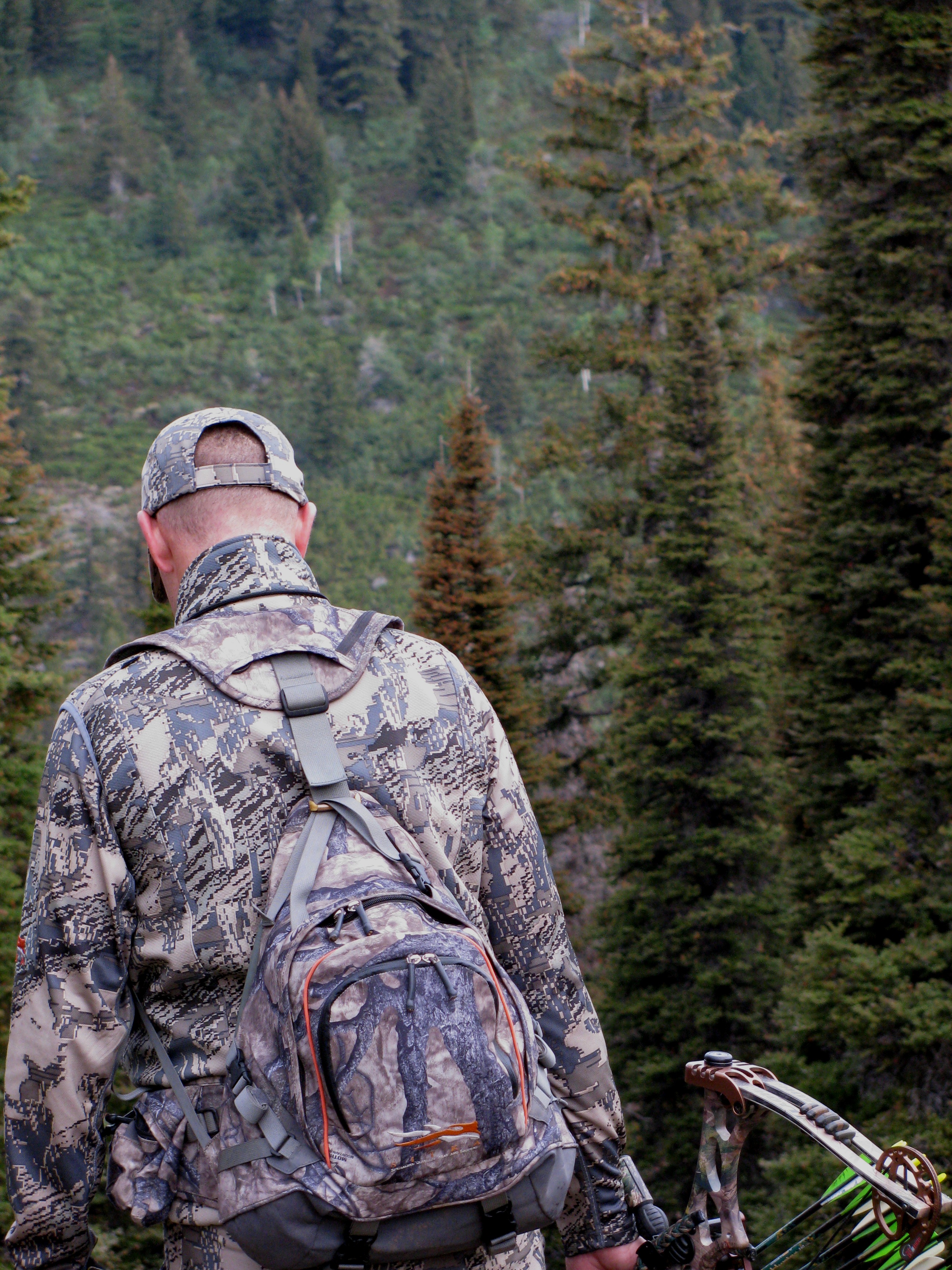 A few of the Elk101.com Pro Staff guys have mentioned in recent articles that it is difficult to boil elk hunting down into one topic that has been the biggest factor in their elk hunting successes. As I sat here and tried to come up with my own list of the Top 5 Elk Hunting Tips, I’d have to say I agree 100%! Elk hunting is made up of so many pieces and it’s difficult to attribute success to any one individual topic. Success in elk hunting is the culmination of all these aspects coming together, working together like a well-oiled machine. The more effort we put into one aspect, the more it adds to the overall efficiency of the system. To achieve the highest level of success, it takes a balanced approach on all fronts – scouting, using elk calls, selecting the right gear, experience, education, conditioning…the list goes on and on.
I’ve tried ranking the tips from number 1 to number 5 and it’s virtually impossible to assign a rank on order of importance. Being in the best shape possible is incredibly important when it comes to hunting elk, but is it more important than obeying the wind? Neither one will matter if you aren’t mentally ready for 7+ days of backcountry abuse and you find yourself sitting in your tent when the sun climbs up over the mountains in the morning. So, in no particular order, here are the Top 5 things I can mention that I feel will contribute most to elk hunting success:
- Calling
- Set-ups
- Conditioning
- Wind
- Attitude
Calling
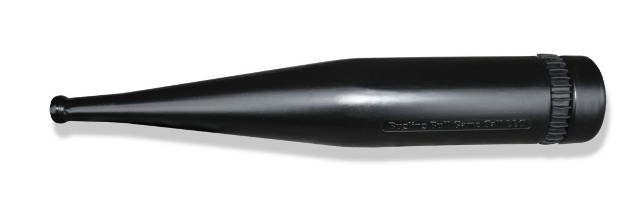 You don’t have to be a great elk caller to call in elk. That doesn’t mean that you don’t need to practice and improve, but don’t let your calling ability be a reason for a lack of confidence in the elk woods. Keep it simple and you’ll be better off. Being an engineer I continually strive for efficiency, especially when it comes to elk hunting. I always hear the stories of the hunters who call in 40+ elk in a season and don’t get a chance to put their tag on one. Man, once we get to 4 or 5 call-ins without a bloodtrail, I start getting pretty antsy! The calling tactics we use only involve 3 calls: a simple cow call, a simple location bugle, and a very effective challenge bugle. Learning when to use each of these calls is more important than making them sound perfect. For more detailed information on the calling sequence we use, as well as audio clips of each of the calls, click here.
Set-ups
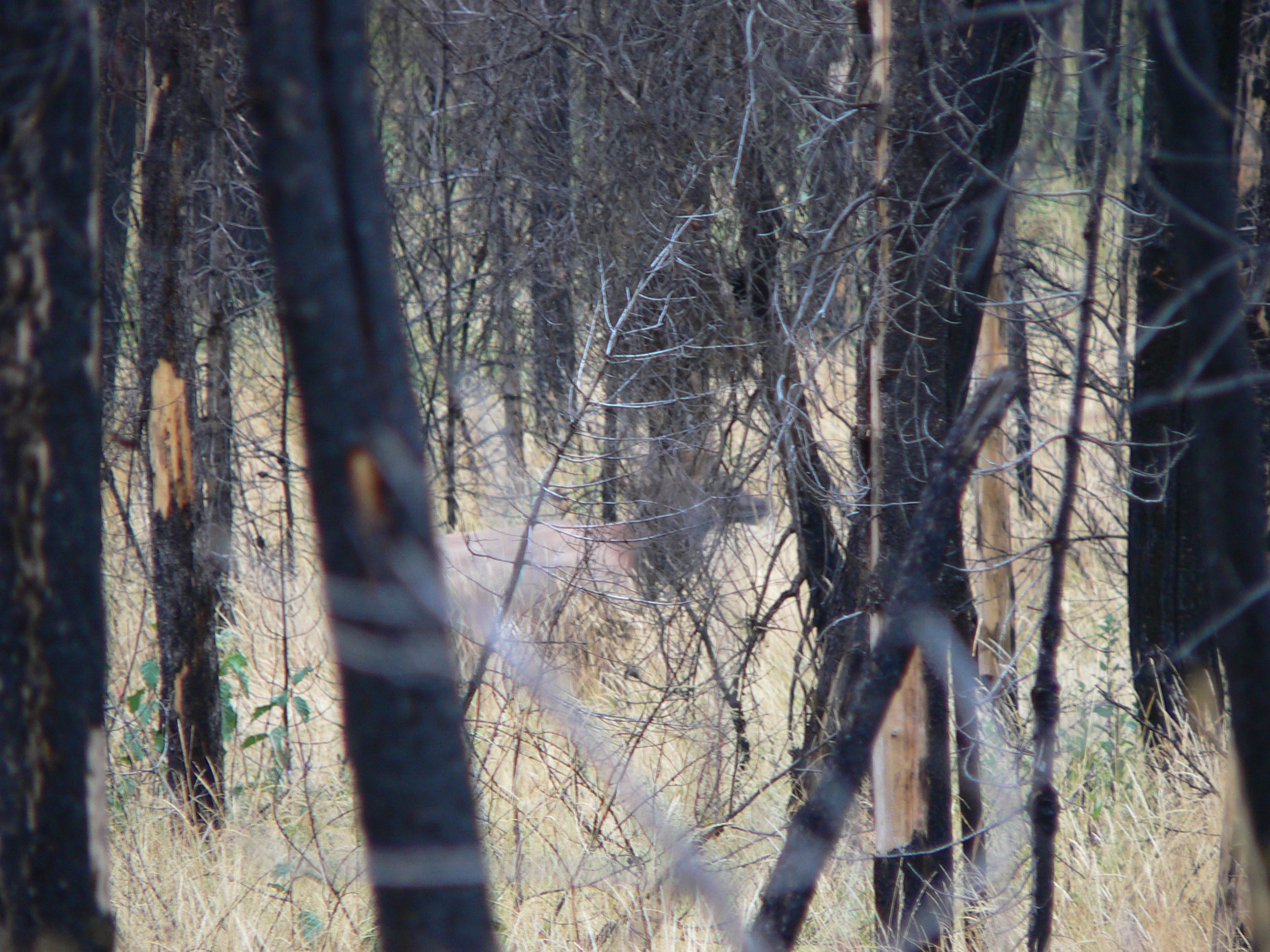 Perhaps the most critical step of the system, set-ups play a very major role in determining the outcome of the hunt. I can’t count how many hunts have been blown by our set-up – too much brush to shoot through, not enough cover to hide in, no shooting lanes, inconsistent wind currents, caught in the open…the list goes on and on. There is one word I always repeat to myself when I’m setting up on a bugling bull: ARC. The meaning of the word “ARC” is two-fold. First, a bull will often approach your set-up by circling down wind. As the shooter, I like to visualize a straight line from the caller to the bull, then draw an imaginary “arc” on the down wind side that the bull will likely follow as he comes in. I always try to set up along that imaginary arc. The second thing “ARC” means to me is Always Remember Concealment. Elk survive by three main senses: sight, sound, and smell. Remembering to conceal yourself from these senses EVERY TIME you set up is vital.
#1)Set up in front of brush or trees and allow your camouflage to break up your outline, concealing you from an elks’ view and giving you clearer shooting lanes. Also be sure to draw your bow when the elks’ vision is obstructed (i.e., head turned or behind a tree). #2) Clear out the area where you set up. This will eliminate the chance of breaking a twig as you shift your weight to draw your bow, or snapping a branch as you come to full draw. #3) OBEY THE WIND! No argument, no excuses. If the elk smells you, the hunt is over. No amount of cover spray, odor eliminating gear, or luck will make your scent disappear from an elk’s nose if the wind is going straight towards him. Keep the wind in your favor, always!
A couple other tips that are worth mentioning on your set-up: hunt with a partner (shooter/caller scenario) and range some landmarks before the elk comes in. Hunting with a partner is an incredibly effective way to call the bull past the shooters’ set-up and increase the chances of the shooter getting a high-percentage shot. As the shooter it’s also important to use a rangefinder to determine the distances to trees, stumps, or rocks around your set-up, thus eliminating any guessing when the bull shows up. There’s few things more frustrating than having everything finally come together only to misjudge the bull by 5-6 yards and shoot under him!
For more information on effective set-ups, click here.
Wind
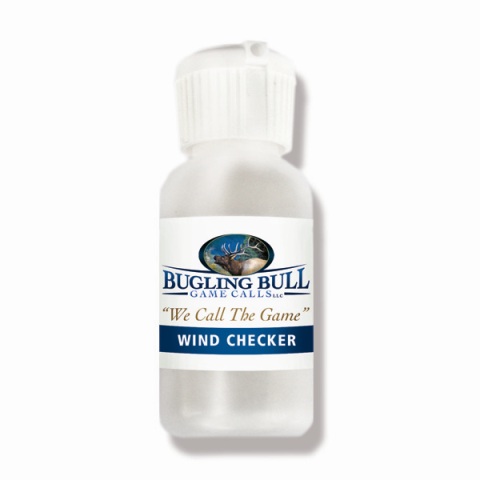 Don’t ever forget to check the wind. In your search for a bugling bull, in your approach, in your set-up – always keep the wind in your favor. We’ve hiked miles out of our way to get the wind right for a set-up. We’ve sat down for several hours waiting for the wind to change to become favorable for a call-in. Whatever it takes, always obey the wind. A small bottle of wind detector is worth its weight in gold for me and I always have one quickly accessible in my pocket, if not in my hand. I’ve always said I’d rather have my wind detector than my release…just make sure your hunting partners don’t take you too literally… 🙂
Conditioning
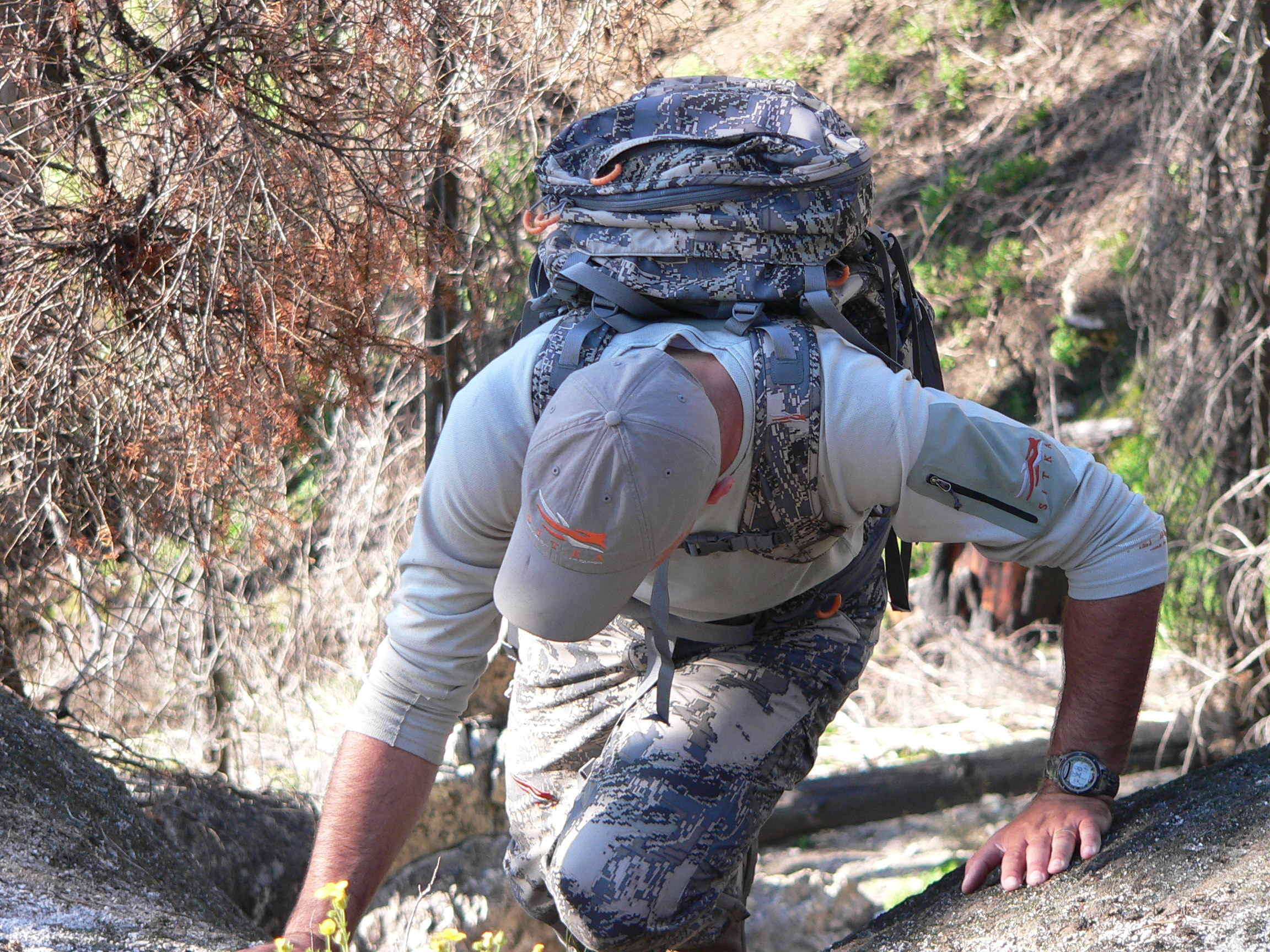 If I had to choose one thing to focus on more than any other aspect when it comes to preparing for an elk hunt, it would be physical conditioning. You can be the best elk caller in the world or the best archer in the world, but if you can’t get to the elk it’s not really going to matter. Being able to cover more ground looking for elk, scrambling over the next ridge to chase a bugling bull, just being able to push yourself just a little harder and go little farther can be what separates you from failure. Take your conditioning to the next level and your success in the elk mountains will likely follow. For more motivation and tips on physical conditioning for elk season, click here.
Attitude
2007 was a rough year for our group. Fires had many of our normal hunting areas closed off and inaccessible. It was hot and dry and the elk weren’t very vocal. After 8 straight days of struggling to find elk, we were just about out of options and time. I decided to take one last “marathon-hunt” into some rough country, just hoping to find a responsive bull. Just before noon, with the midday sun pounding the open ridge I was hiking, I finally got an answer. It was across the canyon on a north-facing bench and I just knew if I could get over there I could call that bull in to bow range. Mustering the last bit of motivation, and desperation, I could, I dropped down into the creek bottom and began climbing up through the boulders and brush on the opposite side. To make a long story short, I messed up on a great 6X6 bull and the realization that my elk season was more than likely over without being able to fill my freezer began to set in.
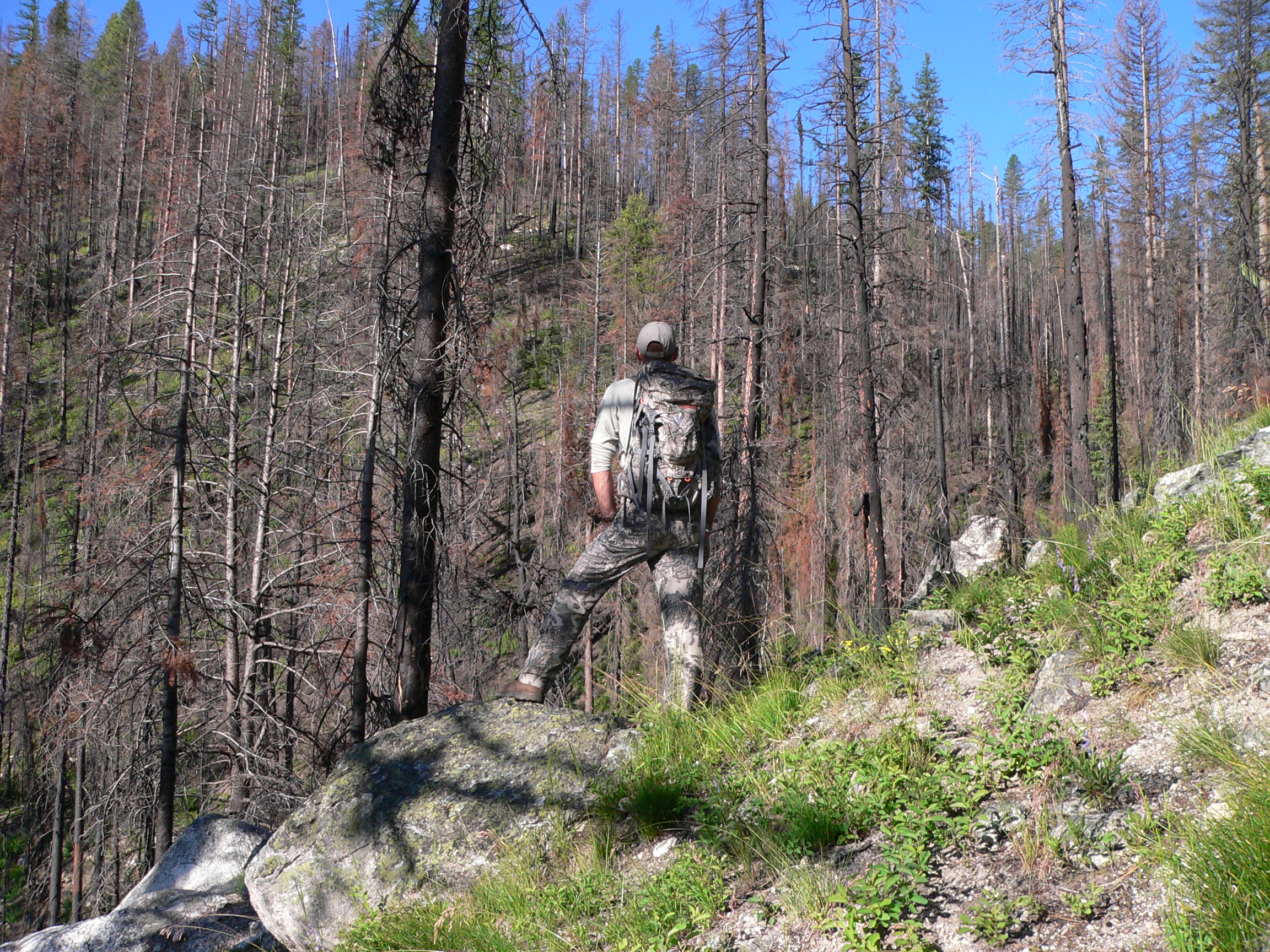 With my head hung low and my legs feeling the effects of 8 days of running and gunning in elk country, not to mention the 7 miles hike still ahead of me to get back to the truck, the wind had left my sails. It was around 4PM when I hit the ridge heading back towards the creek bottom when my luck changed. Not paying attention to much of anything, I happened to catch some movement coming up the hillside right towards me. It was 2 cows and a calf. As they walked within 15 yards the thought crossed my mind to shoot a cow, but with 7 miles to go I told myself it had to have antlers. And then it appeared. Following the cows and calf was a nice 5X5 bull. I quickly nocked an arrow and came to full draw just as the bull walked into my only shooting lane. I squeezed the trigger and watched my arrow do a nose-dive off an invisible limb, straight into the ground at the bulls feet. I wanted to cry. I wanted to scream! I wanted to throw my bow at the startled bull who was not going to give me a second chance.
I did some real sole-searching on the hike out. With the sun setting on the mountains behind me, I picked up my pace hoping I’d be able to make it to the main ridge before dark as well as shake the thoughts of going to town to buyhalf a beef to get us through the winter! It was then that the fire from deep within started burning. I wasn’t going to give up! There was still time, and if I hiked a little farther and hunted a little harder I could make it happen. I just needed one more chance. With 45 minutes of shooting light left, I hit the base of the main ridge and started up the steep hillside towards the top. My legs were on fire, and each step seemed to get weaker and weaker. My senses were dull, worn out from the disappointing season we’d had and I had to keep telling myself to just put one foot in front of the other…one step at a time. And then it happened, again.
A group of cows busted out across the hillside in front of me. Scrambling to regain my senses and the elk call that was tucked away in my sleeve pocket, I nocked an arrow and gave a soft cow call. Less than 20 yards away on the backside of a thick fir tree, a bull screamed at the call. I stepped back to see if I could find a hole to shoot through and he caught my movement and busted down the hill. I cow called again and sprinted up the trail 15 yards as “auto-pilot kill mode” took control. The bull was standing 30 yards down the hill, looking up towards me as I came to full draw and release the arrow all in one seemingly smooth motion. The hit was perfect and as the sun set behind me, I got a hold of Burdette on the radio. We spent the night curled up on the cold, hard ground, waiting for daylight so we could start packing the bull out to the truck. At 4PM the next afternoon, we finally made it. Dehydrated, hungry, completely exhausted, but successful.
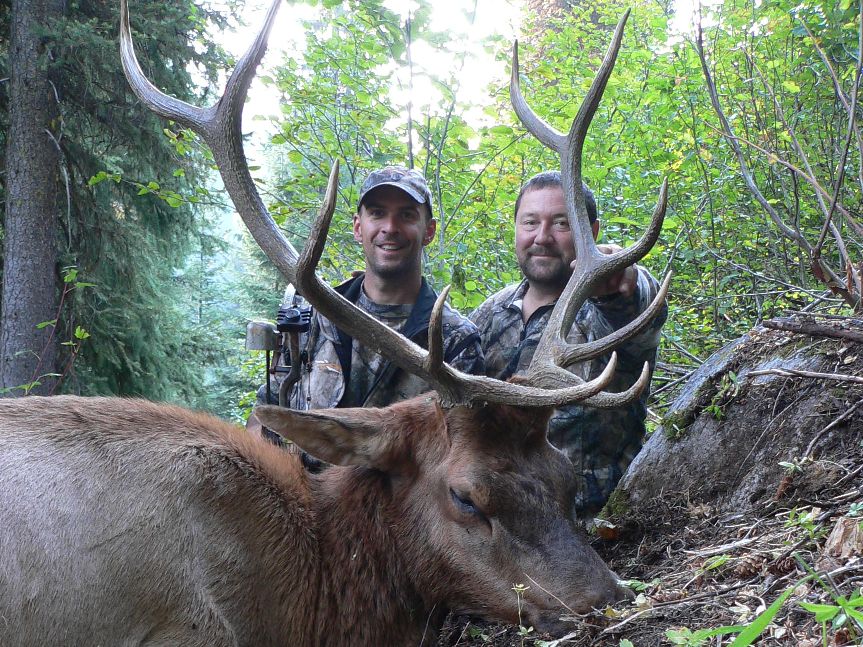 Many times through the 8 days of hunting I wanted to give up. Many more times during the last few hours of that last day, I wanted to give up. And for brief periods of time I probably did give up to some degree. It took just about every minute of that elk hunt and every ounce of energy, motivation, and desire that I could muster to make it happen. Having a “do-whatever-it-takes” attitude is so important, especially on backcountry elk hunts. Don’t give up. Don’t give in. It can happen at any time, just keep yourself in the game and your odds go up significantly!
There is a quote by Jillian Michaels that I like to use to keep me going when the odds seemed stacked against me: “Why would you choose failure when success is an option?” If we give up, we’ve failed and we have no chance of finding success. Success is always possible if we stay in the game and having a solid mental attitude will keep us going, even when the going gets rough.